Tectonics, Climate, and Sedimentary Systems
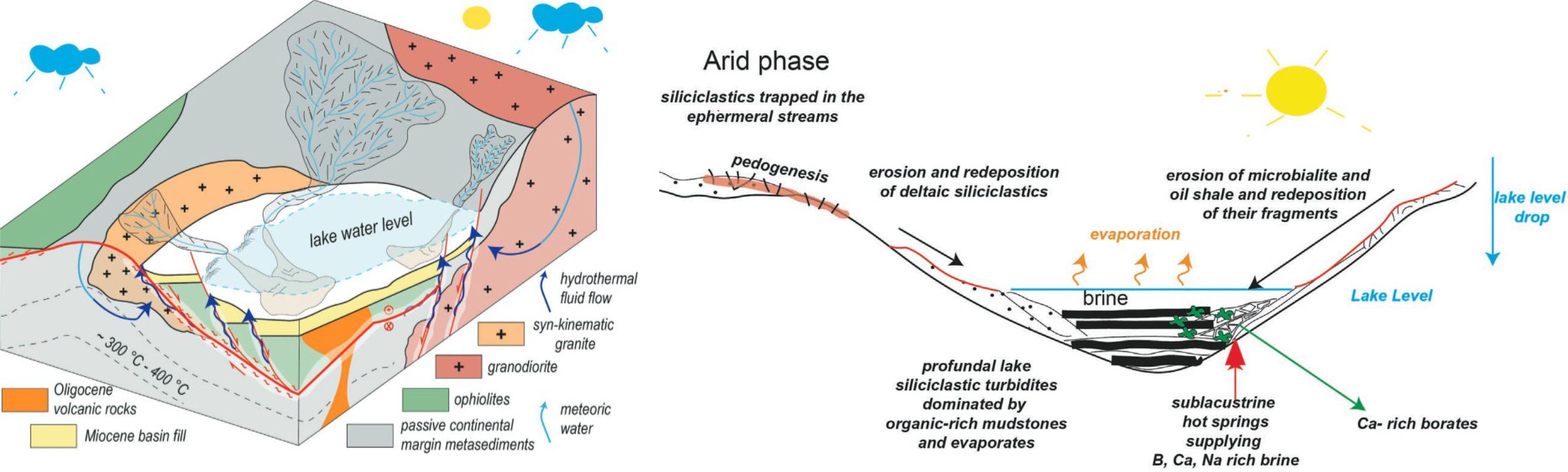
We investigate how tectonics, climate, hydrology, fluid flow, and sediment supply interact to shape sedimentary basins and depositional environments through time. Our research focuses particularly on the Dinarides, the southern Pannonian Basin, and associated Miocene intramontane and marginal basins. Our work includes:
- Tectonic controls on basin evolution, including fault activity, extension, subsidence, and mountain building.
- Sedimentary and stratigraphic reconstruction of lacustrine, marine, and continental depositional environments.
- Fluid–rock interactions and hydrothermal processes, including tectonically controlled travertine deposition and authigenic mineral formation ( (Andrić-Tomašević et al., 2024, 2025).
- Geochronology of basin development using U–Pb dating of volcaniclastic deposits to constrain lacustrine and marine flooding events (Šamarija et al., 2026; Mandic et al., 2026).
- Provenance and sediment-routing analysis to reconstruct changing sediment sources and transport pathways.
- Paleoclimate and paleohydrology, using stable isotopes and sedimentary records to evaluate aridity, water balance, and environmental change.
- Topography–climate interactions, including the influence of orographic rainout, moisture sources, and precipitation seasonality across the Dinarides (Ortiz et al., 2026).
We use field-based sedimentological logging, facies and stratigraphic analysis, U–Pb geochronology, provenance methods, stable-isotope geochemistry, and paleoclimate proxies to reconstruct basin evolution and past depositional environments.
Seismic Interpretation and Basin Analysis
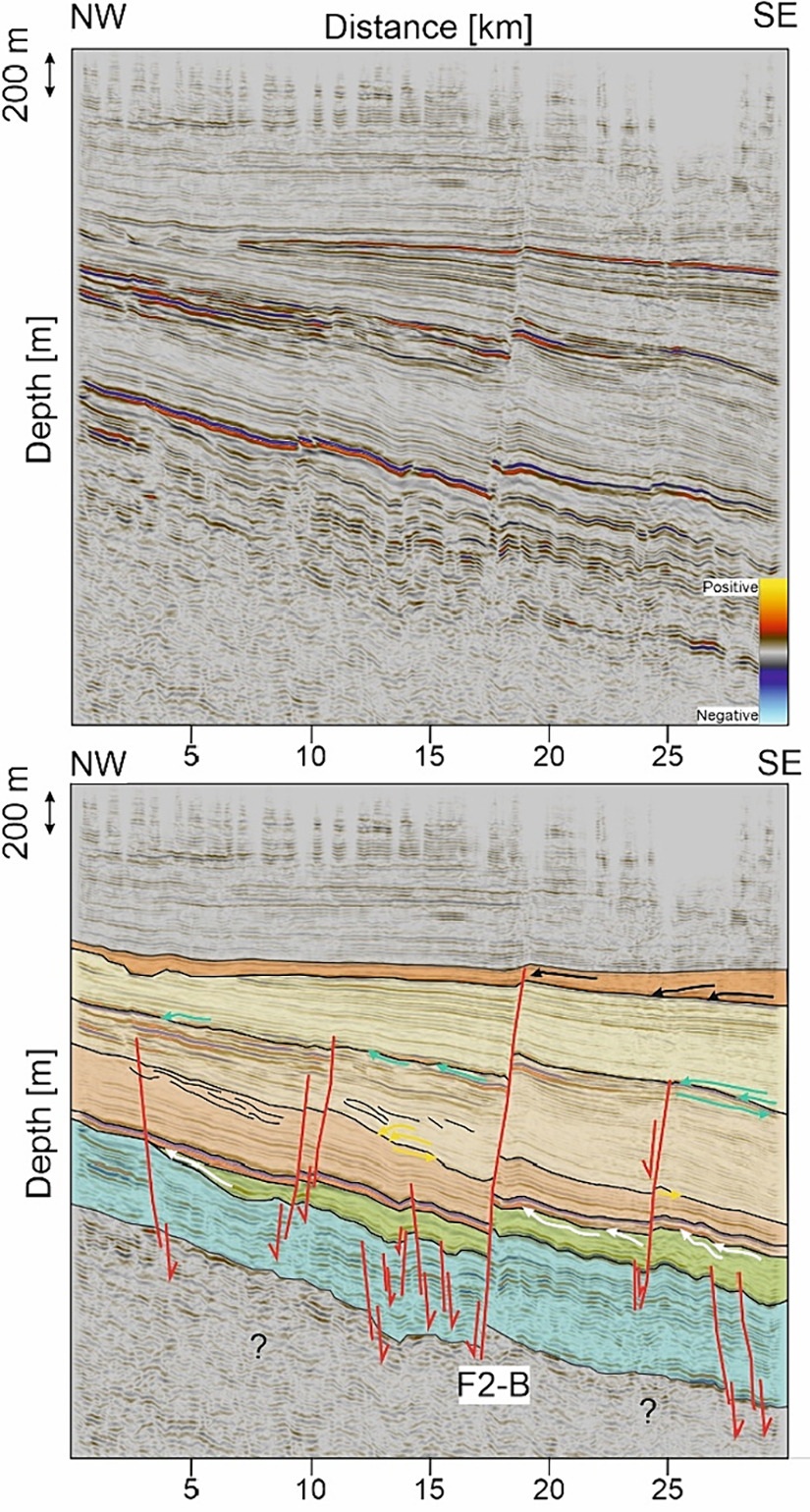 We combine seismic interpretation with quantitative and process-based modelling to investigate how tectonics, lithospheric structure, sediment supply, surface loading, and deep geodynamic processes control the evolution of sedimentary basins. Our work includes:
- Seismic and tectonostratigraphic interpretation to reconstruct basin architecture, depositional systems, and structural evolution.
- 3D geological modelling to analyse spatial variations in sedimentary sequences, fault systems, and basin geometry.
- Subsidence and flexural modelling to quantify accommodation-space generation and lithospheric response to tectonic loading.
- Structural inheritance in foreland basins, particularly the influence of crustal and lithospheric heterogeneity on the Northern Alpine Foreland Basin (Eskens, Andrić-Tomašević.. et al., 2024).
- Syn-flexural faulting and growth strata to understand how bending-related deformation and subsidence are accommodated in the German Molasse Basin (Eskens,Andrić-Tomašević.. et al., 2025).
- Orogenic loading and forebulge migration, using seismic observations and flexural models to evaluate the effects of evolving Alpine surface and subsurface loads (Eskens, Maiti & Andrić-Tomašević, 2025).
- Deep geodynamic controls on stratigraphy, including the potential effects of slab break-off on depocentre migration, sediment thickness, and stratigraphic stacking patterns (Eskens et al., 2025).
- Forward stratigraphic modelling to test how tectonic and geodynamic processes are recorded in sedimentary successions.
For seismic interpretation and 3D geological modelling, we use the commercial software Petrel and the open-source platform OpendTect, while Petrel GPM is used for forward stratigraphic modelling.
.
Geodynamic and Surface-Process Modelling
We use 3D thermo-mechanical and coupled surface-process models to investigate h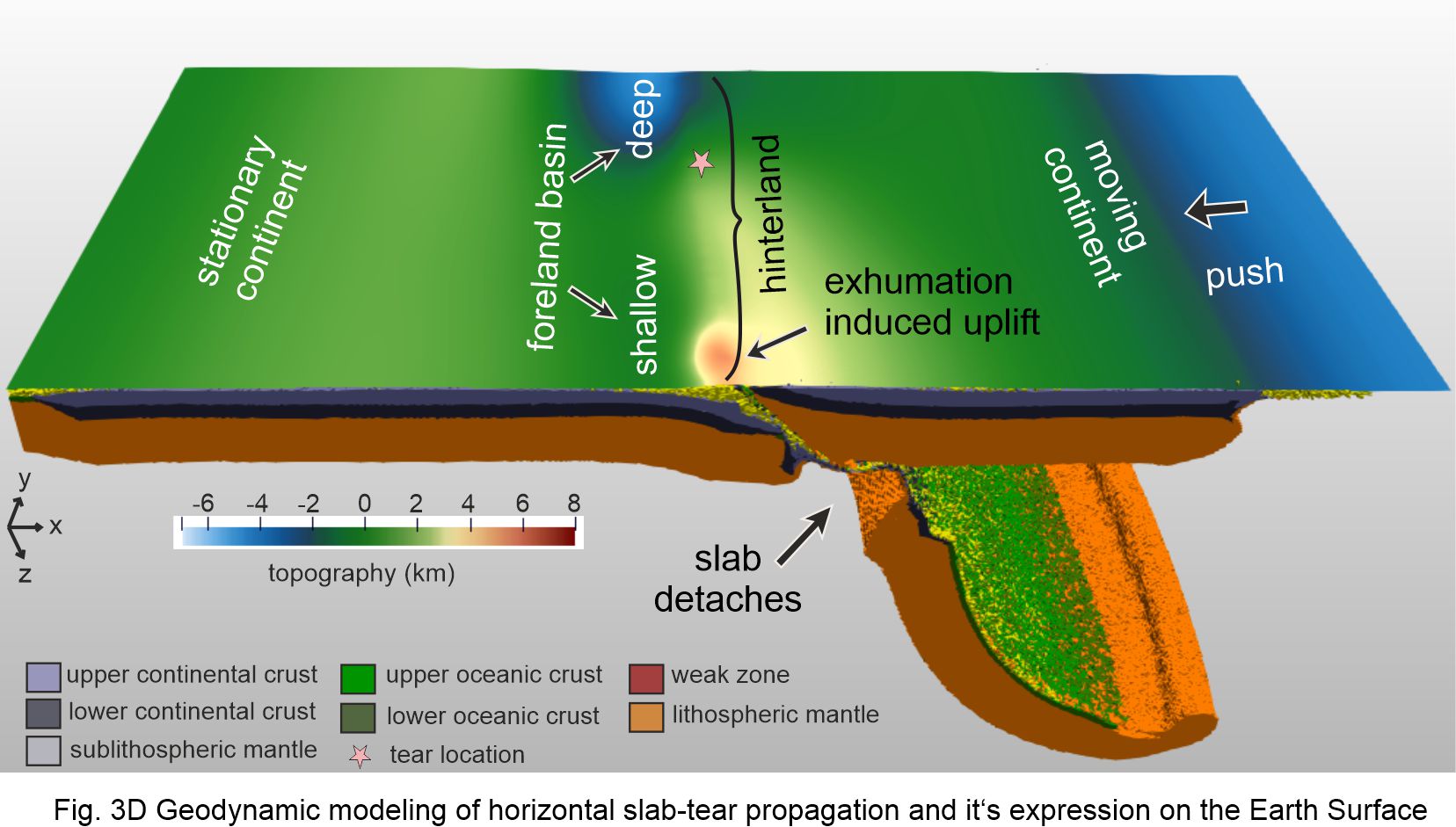 ow slab dynamics, mantle flow, lithospheric deformation, erosion, and sediment transport shape mountain belts, sedimentary basins, and landscapes. Our work includes:
- Slab break-off and lateral slab tearing to quantify their effects on uplift, subsidence, mantle flow, and basin development.
- Oblique subduction and continental collision, including the lateral migration of mountain uplift during progressive slab tearing (Maiti et al., 2024).
- Tear initiation and propagation in non-collisional subduction systems and their influence on trench geometry and surface deformation (Andrić-Tomašević et al., 2023).
- Passive-margin heterogeneity, examining how lithospheric strength controls tearing velocity, uplift–subsidence patterns, and foreland-basin sedimentation (Maiti et al., 2026).
- Slab stagnation and avalanching, including their potential role in accelerating post-rift subsidence in extensional basins.
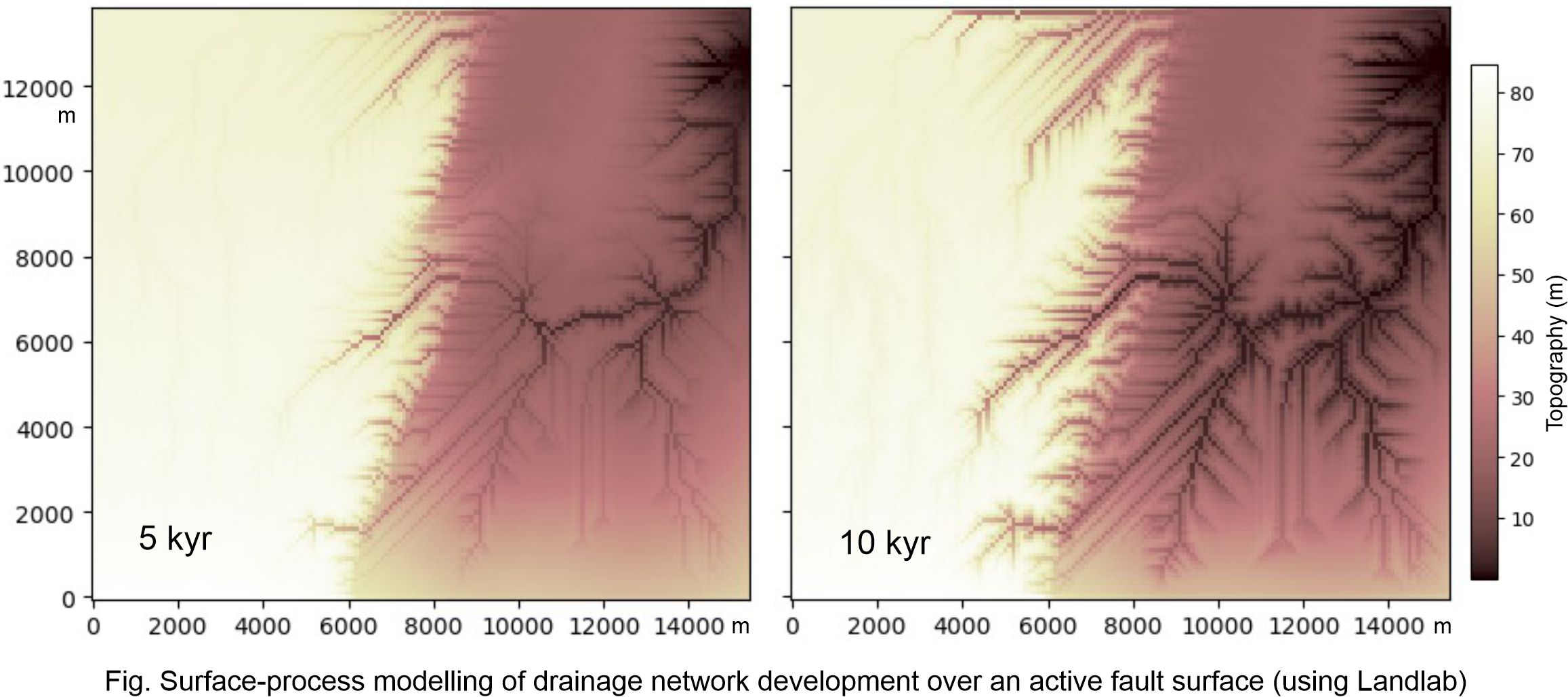
- Coupled tectonic–surface-process modelling to assess interactions among rock uplift, erosion, sediment transport, deposition, and landscape evolution.
We use open-source numerical modelling software, including I3ELVIS and ASPECT for geodynamic simulations and FastScape and Landlab for landscape evolution and surface-process modelling.